
27 October 2026
For Jordan Luck, singer-songwriter and frontman of one of Aotearoa’s best-loved bands, The Exponents, songwriting still contains an element of mystery.
After decades of writing songs that have become part of Aotearoa’s soundtrack, Jordan Luck is no closer to explaining exactly where they come from.
People ask this one, where the songs come from, and I do not know. They come from the ether, I think.
It’s an appropriately loose explanation from a songwriter whose music has travelled far beyond wherever it was first written or recorded. Because, as Jordan puts it, once a song is out in the world, its journey takes on a life of its own.
“As soon as you have recorded it, it’s gone. It’s out of your hands really, and where the song goes, it’s quite... It’s phenomenal actually.”
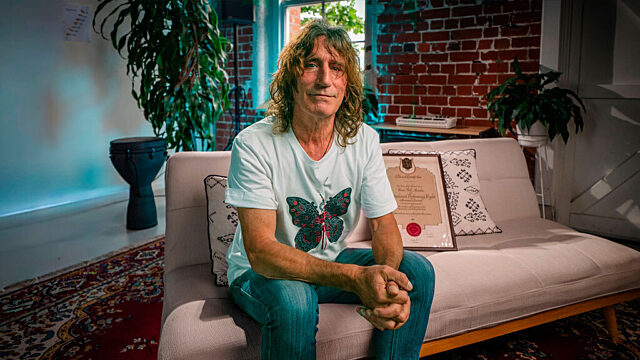
For Jordan, that journey has taken his songs into all sorts of places.
Hair salons. Pubs. Restaurants. And, as he rather memorably points out in our interview, even the occasional public bathroom.
“I’m in a hair salon as you can see, quite often. Pubs, restaurants... if you go into one of those urinals, flipping hell, it’s got ‘...I’ll say goodbye, even though I...’ - I want that dosh!”
There’s humour in hearing one of your songs turn up somewhere unexpected, but there’s a serious point behind it too. When music becomes part of the soundtrack of a business, licensing helps recognise the people who created it.
Jordan recently shared some of these thoughts with Stuff’s Sunday Star-Times for a feature looking at why royalties matter to Aotearoa’s music creators. The story also spoke with OneMusic NZ Director Greer Davies and Head of Operations NZ for APRA AMCOS Anthony Healey about the role public performance licensing plays in sustaining music careers.
Also featured in The Post: The 'music tax' myth, and how royalties keep the music business viable.
For Jordan, though, the argument is refreshingly straightforward:
Where would half the nation be without New Zealand artists being recognised through licensing? If things went unpaid, I know I don’t normally swear, I’m sorry - but flip.
There’s another idea at the heart of Jordan’s interview: pride in the music being created here.
I would hope that establishments playing music would recognise the value of playing New Zealand music.
He describes New Zealand as punching above its weight when it comes to producing great songs. Businesses are one of the many places those songs continue to find audiences, sometimes decades after they were first released.
That’s part of what music licensing recognises. A song doesn’t stop having value once it has been recorded. It can keep being played, heard and enjoyed in all kinds of places, with public performance royalties helping return value to the people behind the music.
And Jordan’s message to the businesses playing those songs is characteristically simple:
New Zealand per capita is phenomenal producers of great song, punching above their weight indeed. We the songwriters are grateful. Very, very grateful for your support. Thanking you.
Watch our full interview with Jordan Luck above to hear more about songwriting, where his songs have ended up, and why recognising the value of New Zealand music matters.
Share
